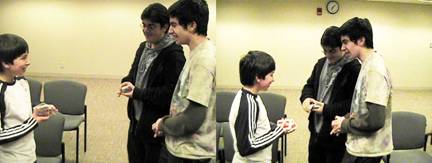
Under the guidance of the Junior Ring advisor and mentors, young magicians grow as performers and learn the various aspects of the art of magic!
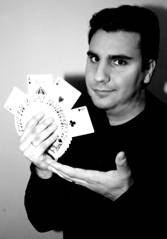
IBM Ring 244 Junior Ring Advisor
IBM Ring 244 JuniorRing Mentors

| 
| 
| 
|
| Harry Mandel | Bob Weinowitz | Bob Dorian | Zach Mandel |
Learning & Performing Magic:
- Helps you make
friends.
Magic is an
instant ice-breaker. In addition, a club creates a community of people with a
common goal of making others feel a sense of wonder and excitement.
- Builds
confidence through public speaking.
One of the
most common phobias held by people is talking in front of a group of strangers.
Magic is a great way to help alleviate this kind of fear.
- Improves
problem solving and critical thinking skills.
Magicians,
by nature, are problem solvers. They brainstorm ideas for how to fool and amaze
their audience, and then they devise clever ways to implement those ideas.
- Increases
manual dexterity better than any video game ever could.
Parents constantly
complain that their kids spend too much time in front of the computer or
television playing video games. Magic is a surefire way to improve manual
dexterity and hand-eye coordination without plopping down in front of the tube.
- Introduces you
to other forms of art.
Many magic
shows can incorporate elements of music, dance, drama, visual arts, and other
forms of creative expression to enhance their appeal to an audience. Learning
magic often facilitates the discovery of artistic talents of which you may not
be aware.
- Can serve as
an educational tool.
Many mental
magic tricks utilize mathematical principals; others tricks work because of
scientific principals such as optics, mechanical forces of motion, static
electricity, or chemical reactions. In addition, one can learn history by
researching the evolution of a magic effect. Finally, the magic performance is
the perfect forum to practice one’s linguistic skills. (Of course, there’s
always performing for those from foreign countries, so brushing up on foreign
language skills might be necessary, too)
- Can make you
money, if you’re good enough at it.
All great
magicians start out some where, many of them as performers at children’s
parties, as paid street performers, or as restaurant magicians. Magic is a fun
hobby that can also potentially give you a side income. In addition, magic is a
show “business”, and learning it can teach students about advertising,
marketing, and, of course, being responsible. Hey, even David Copperfield was
once “Davino, Boy Magician, Available for Kid’s
parties, Bar Mitzvahs, Communions, and Confirmations.”